

Russia Hits Ukraine Energy Sites in Most Powerful Blow of 2026
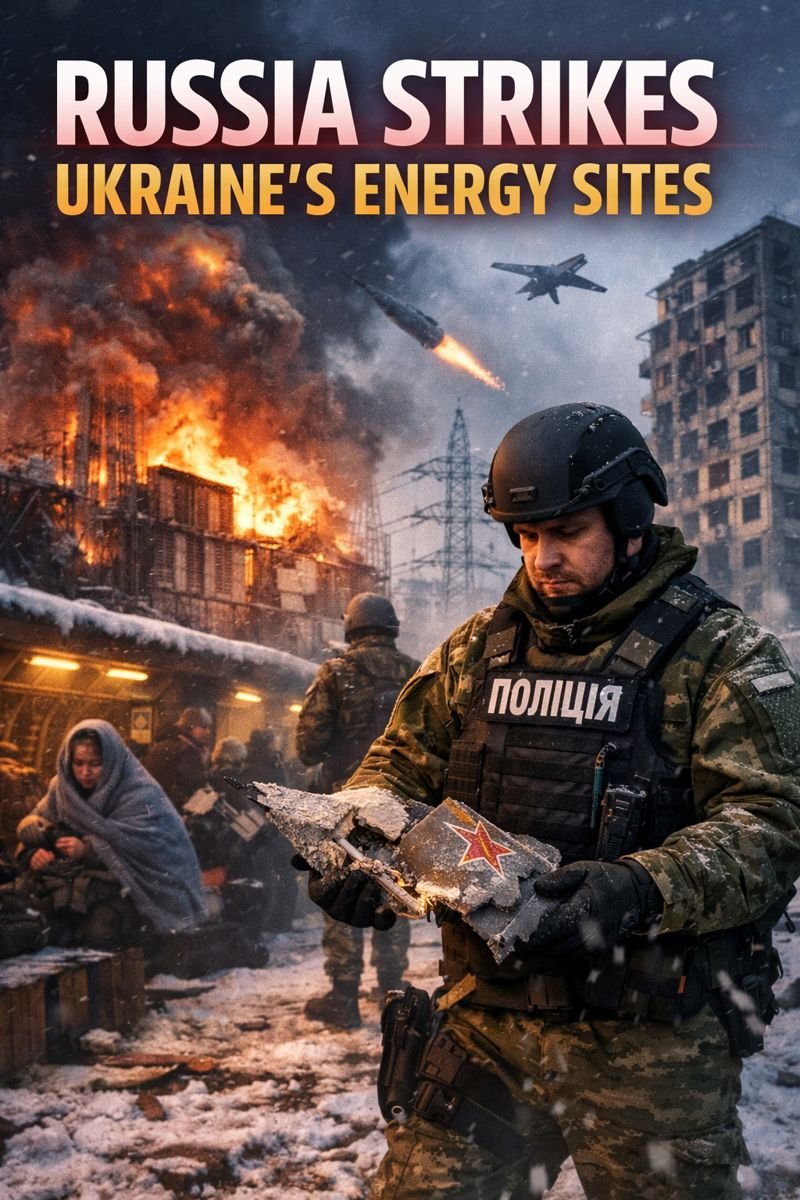
Russia has unleashed what Ukrainian officials describe as the most powerful attack on Ukraine’s energy infrastructure since the start of this year. A massive combination of ballistic missiles and drones struck power facilities across Kyiv, Kharkiv, Odesa, and Dnipro, leaving hundreds of thousands without heating during freezing winter temperatures. The assault marks a dramatic escalation in the war and raises fears of a humanitarian catastrophe.
Record Missile Strikes Target Ukraine Energy Sector
According to President Volodymyr Zelensky, Russia fired more than 70 ballistic and cruise missiles along with around 450 attack drones in a coordinated overnight operation. Private energy company DTEK confirmed that several of its power plants were directly hit, calling the assault the heaviest blow to Ukraine’s energy grid in 2026.
The attack occurred as temperatures plunged to –20°C, intensifying the suffering of civilians. Over 1,000 residential buildings in Kyiv were left without heating, while a major power plant in Kharkiv was damaged beyond repair. Ukrainian officials say the timing was deliberate—aimed at maximizing civilian hardship.
Collapse of the Trump–Putin Energy Truce
The strikes came just days after the expiration of a temporary “energy truce” reportedly brokered by former US President Donald Trump and Russian leader Vladimir Putin. Ukrainian authorities believe Moscow used the pause to stockpile missiles and prepare a larger offensive.
NATO Secretary-General Mark Rutte was in Kyiv on the same day to meet Zelensky and address parliament, signaling Western concern over the deteriorating situation. Diplomatic talks between Russian and Ukrainian negotiators are scheduled in Abu Dhabi later this week, but the latest bombardment has cast doubt on any immediate breakthrough.
Civilian Infrastructure and Possible War Crimes
Power Plants Used Only for Heating Were Hit
DTEK reported that some of the targeted facilities were dedicated solely to providing heating, not electricity or military supply. Under the Geneva Conventions, deliberate attacks on civilian infrastructure can constitute a war crime.
Each wave of strikes leaves Ukraine’s grid more fragile. Engineers working around the clock struggle to repair transformers and substations, but shortages of equipment and manpower make recovery increasingly difficult.
Ukraine Air Defence Under Pressure
Ukraine’s Air Force intercepted only 38 of the incoming missiles, highlighting a severe shortage of air-defence systems, particularly US-made Patriot missiles. Zelensky again appealed to allies for urgent deliveries, warning that without protection “there will be no end to this war.”
Life in Kyiv Without Heating
Residents spent the night sheltering in metro stations, some pitching tents on platforms to escape the bitter cold. Soup kitchens have become lifelines as power cuts make cooking impossible. Many families sleep in coats and hats inside their apartments.
People in Kyiv believe the Kremlin’s strategy is to break civilian morale and force Ukraine to accept territorial concessions in the Donbas. Instead, the attacks have hardened public resistance.
“Russia won’t get what it wants. We are stronger than them,”
— Vera, a Kyiv resident queuing for food aid.
Another resident, Volodymyr, said he would sleep in a school with a generator because his flat was uninhabitable. “They want us to freeze and die,” he said angrily.
Strategic Goals Behind Russia’s Energy War
Military analysts say the Kremlin is shifting from battlefield advances to infrastructure warfare. By destroying heating and electricity, Moscow hopes to create a refugee wave toward Europe and weaken Kyiv’s negotiating position.
However, the tactic carries risks. Western governments are already discussing new sanctions and accelerated weapons deliveries. NATO states warn that targeting civilians could trigger stronger international intervention.
Engineers as Ukraine’s Hidden Heroes
Across the country, teams of electricians and mechanics travel from region to region repairing damaged grids. Many work under constant threat of renewed strikes. They have been hailed as “the second army of Ukraine.”
But experts warn the system is approaching a breaking point. Spare parts are scarce, and Soviet-era equipment is difficult to replace.
What Comes Next
With negotiations planned in Abu Dhabi, the world waits to see whether diplomacy can survive the latest escalation. For ordinary Ukrainians, survival remains the priority: finding warmth, food, and a safe place to sleep.
Forbesbbc.blog
The latest assault on Ukraine’s energy network reveals a new phase of modern warfare where power grids become primary battlefields. Unlike traditional conflicts focused on military targets, this strategy weaponizes winter itself, turning electricity and heating into tools of coercion. For global policymakers and energy experts, Ukraine has become a case study in how fragile urban infrastructure can determine the outcome of geopolitical struggles. The resilience of ordinary citizens, supported by decentralized community aid and rapid engineering responses, demonstrates that national security today is measured not only by tanks and missiles but by transformers, generators, and the human will to endure.