Europe Won’t Be Blackmailed by Trump Greenland Threats: A Transatlantic Standoff
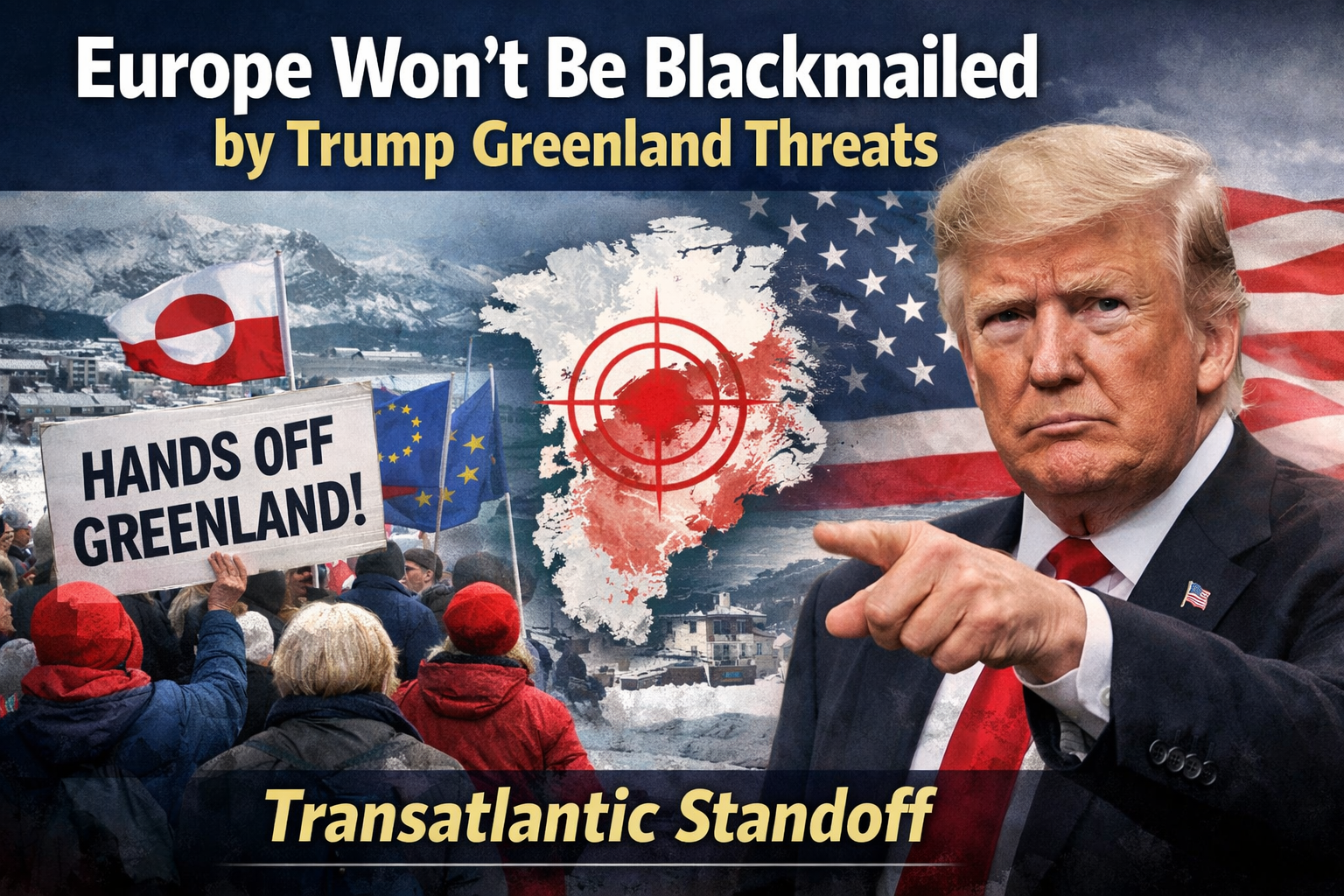
In the early hours of Monday, the world woke up to a diplomatic storm. Donald Trump had renewed his controversial threats over Greenland, proposing tariffs on eight NATO allies if they opposed the U.S. plan to take over the autonomous Danish territory. The move ignited widespread international condemnation and public protests across Denmark and Greenland, highlighting the tension between sovereignty and U.S. strategic ambitions.
European leaders, led by Danish Prime Minister Mette Frederiksen, issued a strong statement asserting that Europe won’t be blackmailed by Trump Greenland threats. They warned that such actions could trigger a “dangerous downward spiral” in transatlantic relations.
The Trump Threat
Trump argued that Greenland is vital for U.S. security, particularly in the Arctic, and claimed NATO had long pressed Denmark to counter the “Russian threat” in the region. On Truth Social, he said, “NATO has been telling Denmark to get the Russian threat away from Greenland for 20 years… Now it is time, and it will be done!”
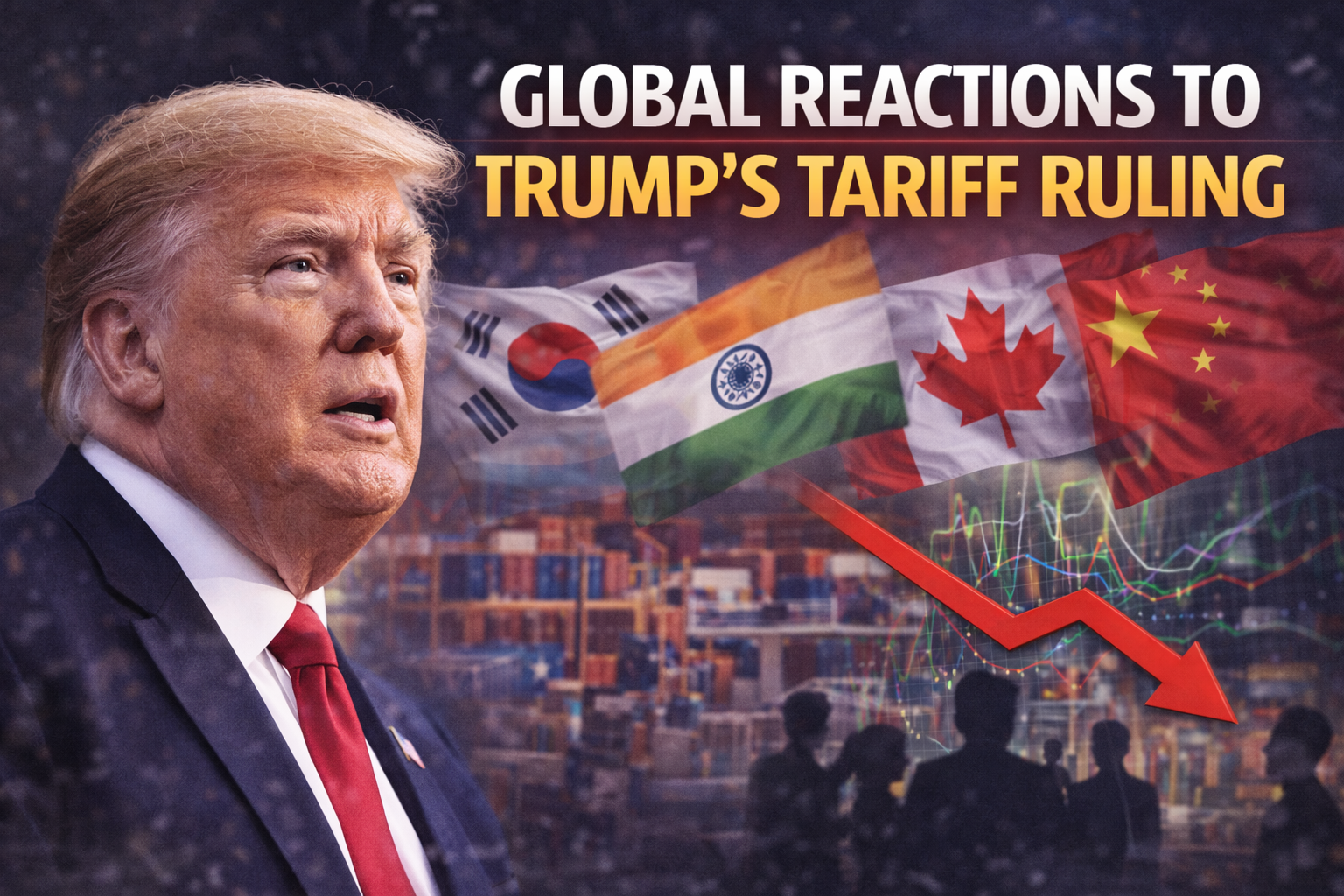
He proposed new tariffs starting at 10% on goods from Denmark, Norway, Sweden, France, Germany, the UK, the Netherlands, and Finland, effective 1 February, with the potential to rise to 25% until a deal is reached. According to Trump, Greenland could be acquired “the easy way or the hard way,” sparking outrage across Europe and raising questions about international law and Arctic security.
European Solidarity
European leaders immediately condemned the move. Frederiksen emphasized, “We want to cooperate and we are not the ones seeking conflict. Europe will not be blackmailed.” In a joint statement, Denmark, Norway, Sweden, France, Germany, the UK, the Netherlands, and Finland stressed that tariff threats undermine transatlantic relations and reiterated solidarity with Greenland and Denmark.
NATO’s collective security principles were central to their stance. Leaders highlighted their commitment to Arctic security cooperation, affirming that sovereignty and territorial integrity are non-negotiable under international law. Norwegian Foreign Minister Espen Barth Eide stressed that mutual respect for sovereignty is the “non-negotiable” core principle of international law and co-operation in the Arctic.
Public Outrage
Protests erupted in Greenland’s capital, Nuuk, and in Copenhagen, Denmark. Demonstrators held banners reading “Hands off Greenland” and “Greenland for Greenlanders.” Public anger was fueled by polls showing minimal support for U.S. control. A January 2025 poll revealed that only 6% of Greenlanders supported joining the U.S., while 85% opposed it. Similarly, a recent Reuters/Ipsos poll indicated just 17% of Americans favored Trump’s plan, compared to 47% opposing it.
The protests coincided with a visit from a U.S. Congressional delegation, whose leader, Senator Chris Coons, described Trump’s rhetoric as “not constructive.” Citizens and local leaders demanded respect for Greenland’s autonomy and condemned any coercive measures.
Key International Responses
European leaders coordinated their response swiftly:
- French President Emmanuel Macron announced plans to potentially activate the EU’s “anti-coercion instrument” if tariffs were imposed.
- UK Prime Minister Sir Keir Starmer communicated directly with Frederiksen, EU Commission President Ursula von der Leyen, and NATO Secretary-General Mark Rutte, emphasizing that Greenland’s security is a priority for all NATO members.
- Canadian Prime Minister Mark Carney highlighted Canada’s concern and pledged to strengthen Arctic security, investing in critical infrastructure and military readiness.
The statement from these countries emphasized the importance of maintaining a transatlantic dialogue based on respect for sovereignty and peaceful cooperation.
Greenland’s Strategic Importance
Greenland’s location between North America and the Arctic makes it a critical hub for early-warning missile systems and monitoring maritime traffic. It is sparsely populated but rich in natural resources. Trump argued that the territory’s strategic position justified U.S. acquisition, yet European leaders stressed that mutual respect for sovereignty is essential for peace and collaboration in the Arctic.
US Treasury Secretary Scott Bessent further defended Trump’s rationale, stating that Greenland can only be defended if part of the U.S., though critics argued that this undermined international law and ignored local autonomy.
Diplomatic Tensions and Dialogue
Despite threats, Denmark and its European allies are pursuing constructive dialogue. Frederiksen noted that Europe is committed to peaceful solutions and cooperation. Mark Rutte, the Dutch Prime Minister, confirmed ongoing discussions with Trump, expressing hope for resolution during the upcoming World Economic Forum in Davos, where transatlantic security and Arctic cooperation will be key topics.
Frederiksen, Macron, Starmer, and Ursula von der Leyen emphasized that Europe’s stance is firm: Greenland’s territorial integrity will not be compromised, and tariff threats will not dictate European policies.
Public Opinion and Future Outlook
Greenlanders and Europeans have voiced strong opposition. Demonstrations and social media campaigns highlight widespread disapproval of any U.S. attempt to acquire Greenland. Analysts warn that tariffs could escalate tensions but unlikely change Greenland’s status.
Trump’s approach has sparked debate in the U.S. as well. Many Americans oppose forcing control over Greenland, highlighting the diplomatic and ethical complexities of coercive foreign policy.
FAQs
Q1: Why does Trump want Greenland?
A: Greenland is strategically located for missile early warning systems, Arctic security, and monitoring maritime routes.
Q2: What tariffs did Trump threaten?
A: Trump proposed tariffs starting at 10% on Denmark, Norway, Sweden, France, Germany, the UK, the Netherlands, and Finland, potentially rising to 25% until a deal is reached.
Q3: How are European countries responding?
A: Denmark, Norway, Sweden, France, Germany, UK, Netherlands, and Finland have expressed solidarity with Greenland, emphasizing sovereignty and Arctic security.
Q4: What is public opinion in Greenland?
A: A January 2025 poll showed only 6% of Greenlanders favored U.S. control, while 85% opposed it.
Q5: Are there ongoing dialogues to resolve this?
A: Yes, European leaders and U.S. officials are engaging in discussions, including at the upcoming World Economic Forum in Davos.