
Tech Dense Farms The Future of Farming Explained
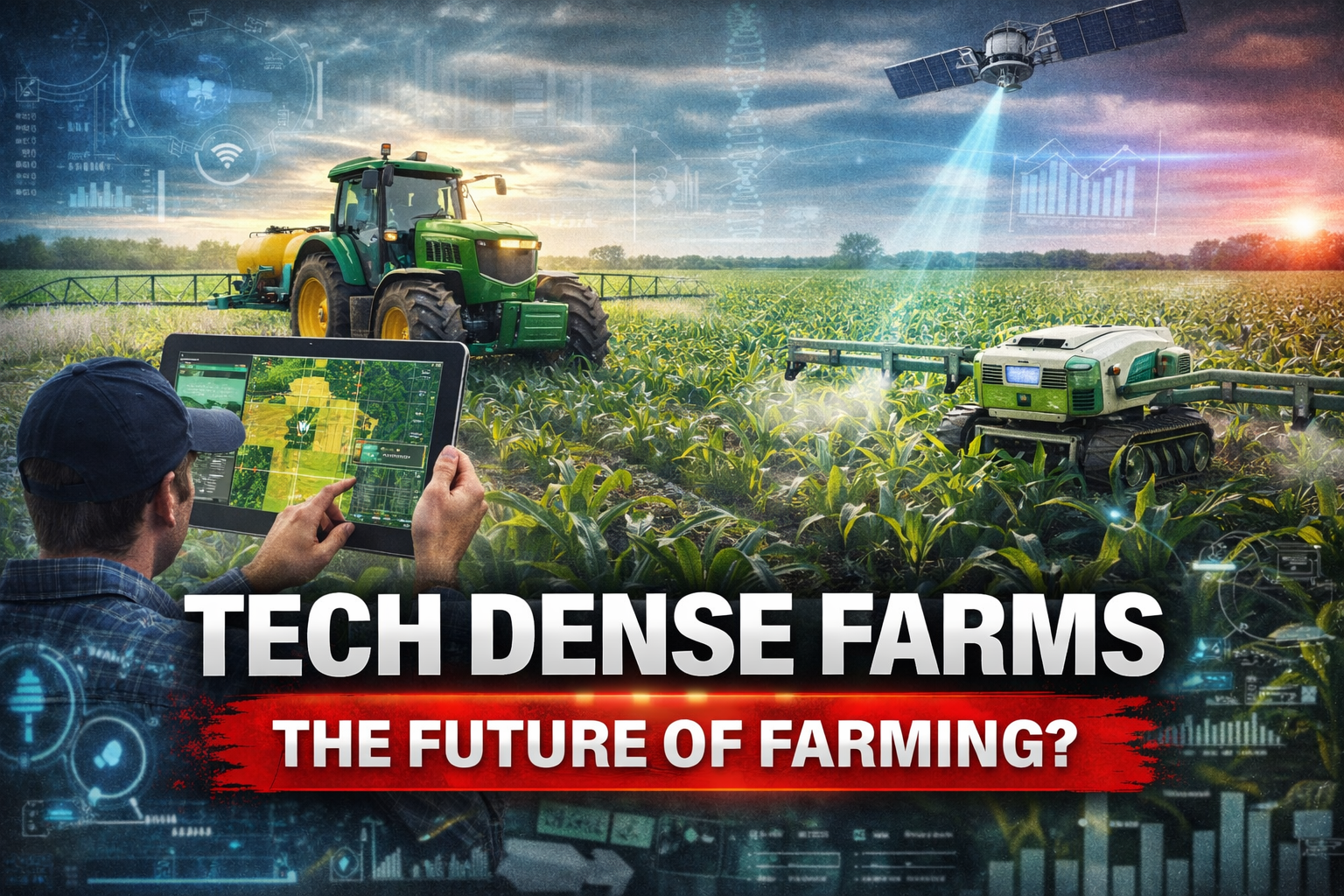
Farming in the 21st century is undergoing a transformation. As traditional methods give way to smarter, data-driven strategies, the question arises: are tech dense farms the future of farming? According to government reports and farmer experiences across North America, the answer is increasingly “yes.”
Modern agriculture is no longer just about plowing fields and sowing seeds. More and more farmers — from large agricultural enterprises to family-run farms — are integrating advanced technologies into everyday operations. The result? Higher crop yields, more efficient use of resources, and a shift toward precision agriculture that could change food systems around the world.
Why Farms Are Becoming Tech Dense
A 2022 report by the U.S. Department of Agriculture (USDA) highlighted a key trend: the number of farms in the United States is shrinking, but the farms that remain are becoming more technology-dense. Fewer but larger operations are driving innovation by adopting tools that increase productivity while reducing labor and cost per unit of output.
At the same time, a 2024 McKinsey survey found that 57% of North American farmers are likely to try new yield-increasing technologies in the next two years — from precision spraying systems to AI-powered crop analytics.
Reference link for USDA data:
🔗 https://www.usda.gov/media/press-releases/2022
Reference link for McKinsey survey overview:
🔗 https://www.mckinsey.com/industries/agriculture/our-insights
Real Stories From Tech Dense Farms
Saskatchewan: A Family Farm’s Digital Turn
Take the example of third-generation farmer Jake Leguee in Saskatchewan, Canada. His family’s farm has been in operation since the 1950s, but today’s version looks very different from the past.
Instead of riding a tractor for hours spraying pesticides manually, Leguee uses a combination of software and remote cameras mounted on his John Deere tractor. The sensors detect weeds on the go, spraying only where necessary, even at speeds of up to 15 miles per hour. This precision application saves time, reduces chemical usage, and significantly cuts operating costs.
“I can kill weeds so much more efficiently now,” Leguee says. “It’s a lot less wasteful than blanket spraying.”
This kind of targeted approach is one of the clearest examples of how technology increases efficiency and sustainability on modern farms.
Farmers Using Apps and Software to Manage Productivity
Not all tech on farms is major machinery. Many farmers start small with apps that simplify daily record-keeping.
At Vermont’s Sweetland Farms, owner Norah Lake used to enter harvest figures into Microsoft Excel manually. Now, she uses a farm management app called Tend. Instead of guessing seed quantities or fertilizer needs, the app calculates these based on actual field data.
“We can use Tend to calculate how much seed we need based on the row feet of a crop,” Lake explains. “It makes planning so much easier.”
This is a real shift from instinct-based farming to data-driven decision-making — a hallmark of tech dense farms becoming the future of farming.
Big Players Bringing AI and Satellite Data to Agriculture
Tech giants are entering the field too. Companies like Syngenta Group have developed platforms such as Cropwise that use AI, satellite imagery, and long-term weather data to help farmers make better decisions.
Cropwise can alert farmers if a section of their field is at risk due to pests or weather irregularities, and even recommend actions based on patterns from decades of historical data.
Feroz Sheikh, Chief Information Officer of Syngenta Group, explains:
“The system uses 20 years of weather pattern data fed into a machine learning model to know what conditions lead to what outcome.”
These technologies mark a new era of predictive farming, where decisions are backed by data rather than guesswork.
Climate Simulation Tools Like NoMaze
In Germany, startups are contributing to this transformation too. NoMaze, founded by Jean-Pascal Lutze, offers simulation software that predicts how crops will perform under different climate conditions.
NoMaze’s simulations help farmers understand things like optimal water usage and planting times. As climate change makes weather more unpredictable, this kind of insight becomes invaluable for securing stable yields.
How Tech Dense Farms Could Lower Food Prices
Improved technology doesn’t just help farmers; it could benefit consumers too.
Heather Darby, an agronomist and soil specialist at the University of Vermont, explains that when farmers can avoid crop failures and increase production stability, more reliable harvests can lead to more food on the market and potentially lower supermarket prices.
“When farmers get help to avoid crop failures, it leads to a more controlled farm environment and a reliable food system,” Darby says.
This is one of the most compelling arguments for the future of farming being technology-driven.
Challenges in Adoption
Despite the benefits, not every farmer embraces technology at the same pace.
Older generations of farmers sometimes resist major changes, preferring traditional methods passed down over decades. Younger farmers, on the other hand, are more willing to adopt new tools — which could accelerate the rise of tech dense farms in North America and beyond.
Darby notes:
“If you treat farming as a business, it’s a great way of life. But if you treat your farming as only a way of life, it can be a horrible business.”
This sentiment reflects a broader push toward viewing farming as a high-tech business rather than purely a labor-intensive lifestyle.
What This Means for the Future of Farming
All signs point to one thing: tech dense farms are not just a trend — they are becoming the foundation of modern agriculture.
From satellites and AI to simple smartphone apps, farmers have more tools at their disposal than ever before. These tools don’t just make tasks easier — they help farmers make smarter, faster, and more profitable decisions.
As the cost of technology drops and adoption increases, the farms of the future will likely rely on:
- Real-time data collection
- AI and predictive analytics
- Precision application tools
- Cloud software for planning and management
This evolution promises higher productivity, better sustainability, and stronger food security.
Conclusion
Farming once meant long days in the field with minimal tools. Today, it increasingly resembles a high-tech industry powered by data, sensors, and smart software. As farms become more efficient, and as digital tools become more accessible, it’s clear that tech dense farms are shaping the future of farming.
For both farmers and consumers, this technological shift could mean stronger harvests, fewer crop failures, and ultimately a more stable global food system.